The Future of Production: How Hybrid Manufacturing is Redefining Precision
Manufacturing is undergoing a quiet revolution. For decades, factories operated under a strict dichotomy: you either added material layer by layer (3D printing) or you removed material from a solid block (CNC machining). Each approach had its own distinct advantages and frustrating limitations.
Enter Hybrid Manufacturing—the groundbreaking process that fuses additive and subtractive technologies into a single, seamless machine platform. By combining the geometric freedom of 3D printing with the unmatched precision and surface finish of CNC machining, hybrid manufacturing is solving some of the toughest engineering challenges in aerospace, medicine, and beyond.
What is Hybrid Manufacturing?
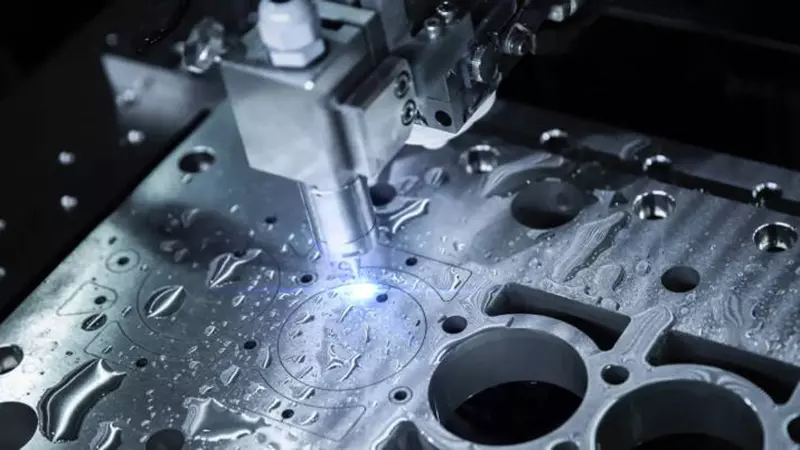
At its core, hybrid manufacturing integrates Additive Manufacturing (AM)—typically Directed Energy Deposition (DED) or powder bed fusion—with Subtractive Manufacturing (Computer Numerical Control milling) inside one unified workspace.
Instead of moving a fragile, half-finished metal part between two different machines (which introduces alignment errors, handling time, and human error), a hybrid machine does it all.
-- The Additive Phase: The machine builds the complex core or near-net shape of the component, growing internal channels, lightweight lattice structures, or intricate geometries that traditional machining could never achieve.
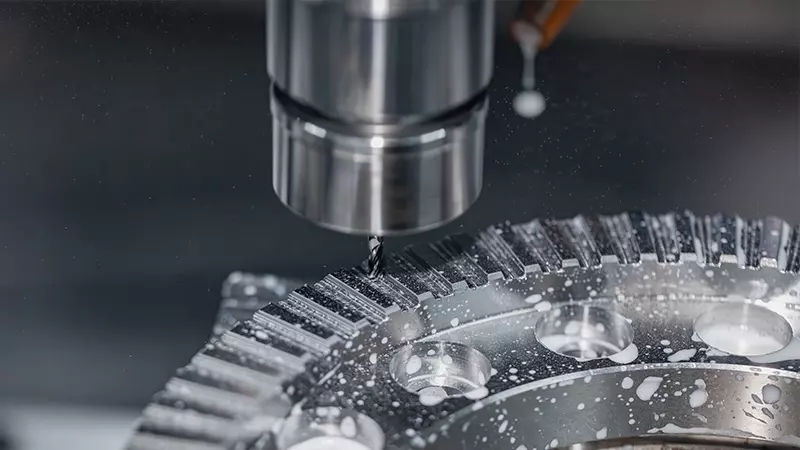
-- The Subtractive Phase: While the part is still mounted on the bed, high-speed CNC milling tools step in to shave away rough surfaces, carve out tight tolerances (often down to microns), and drill precise holes.
Key Advantages Over Traditional Methods
Why are forward-thinking industries rapidly adopting hybrid systems? The benefits go far beyond simple convenience.
1. Unmatched Geometric Freedom Meets High Precision
3D printing excels at creating complex internal geometries, but it often struggles with rough surface finishes and loose dimensional tolerances. CNC machining delivers mirror-like finishes and exact measurements, but is limited by what a cutting tool can physically reach. Combined, you get complex internal structures with exterior surfaces finished to aerospace specs.
2. Drastically Faster Prototyping and Lead Times
Traditional tool-and-die manufacturing can take weeks or months just to set up. Hybrid systems drastically shorten the product development lifecycle. Going from a digital computer-aided design (CAD) file to a fully finished, high-strength metal component can happen in a single setup, cutting lead times by up to 50%.
3. Superior Material Efficiency and Sustainability
Subtractive manufacturing is notoriously wasteful; a CNC mill might carve away 80% to 90% of a solid titanium block, turning expensive metal into scrap chips. Hybrid manufacturing builds up only the material needed (near-net shape) before machining away the excess. This dramatically reduces material waste—a massive win for both cost reduction and environmental sustainability.
4. The Ability to Repair High-Value Parts
One of the most exciting applications of hybrid technology isn't just making new parts—it's repairing worn or damaged ones. High-value components like turbine blades, injection molds, or aerospace impellers often develop micro-cracks or wear down. A hybrid machine can scan the damaged area, deposit new metal precisely where it's needed via 3D printing, and then mill it back to its original factory dimensions.
Industry Applications: Where Hybrid Shines
Because hybrid manufacturing bridges the gap between rapid prototyping and heavy-duty production, it has found a natural home in demanding industries:
-- Aerospace & Defense: Jet engine components, rocket nozzles, and structural brackets require extreme reliability, lightweight designs, and exotic high-temperature alloys (like Inconel or titanium). Hybrid manufacturing allows engineers to build lightweight internal cooling channels while maintaining the exact tolerances required for flight safety.
-- Medical & Orthopedics: Customized medical implants—such as spinal cages or hip replacements—benefit immensely. 3D printing creates porous titanium structures that mimic human bone, encouraging natural tissue ingrowth, while CNC machining ensures the connection points fit surgical instruments perfectly.
-- Tool and Mold Making: Injection molding dies often feature complex, conformal cooling channels that follow the shape of the mold to speed up cooling times. Hybrid machines can effortlessly print these complex internal pathways and mill the parting lines with extreme accuracy.
Overcoming Challenges
Like any emerging technology, hybrid manufacturing faces hurdles on its path to universal adoption.
l High Initial Investment: Hybrid machines are sophisticated pieces of industrial equipment that require significant capital expenditure.
l Programming Complexity: Generating toolpaths that seamlessly switch between adding and removing material requires advanced software and highly skilled operators.
l Material Qualification: Ensuring that the transition zone between the printed base metal and the machined surface meets rigorous industry standards takes careful thermal and metallurgical management.
However, as software automation improves and machine costs stabilize, these barriers are steadily shrinking.
The Road Ahead
Hybrid manufacturing represents a fundamental shift in how we think about making things. By breaking down the walls between additive and subtractive techniques, engineers are no longer forced to choose between the design freedom of 3D printing and the reliability of traditional machining.
As the technology matures, hybrid systems will move further out of specialized labs and onto mainstream factory floors, paving the way for a smarter, faster, and far more sustainable era of industrial production.